
Cordyceps is a genus of parasitic fungi that first gained attention centuries ago when Tibetan yak herders noticed their animals becoming unusually energetic after grazing on a small orange fungus growing at high altitude. Today, the cultivated form Cordyceps militaris is one of the most studied functional mushrooms in the world.
The key compound is cordycepin (3'-deoxyadenosine) — structurally similar to adenosine, a molecule involved in energy transfer throughout the body. Research has focused on cordycepin's potential to support ATP production, oxygen utilization, and mitochondrial function — the cellular infrastructure that powers everything you do.
Two Paths to Energy
Caffeine masks fatigue. Cordyceps is studied for supporting how your cells generate it.
Caffeine
Blocks adenosine receptors
Brain can't detect fatigue
Nervous system stimulated
Energy spike (30-60 min)
Crash when effect wears off
Cordyceps
Cordycepin enters cells
Mitochondria supported
ATP production enhanced
O2 utilization improves
Sustained cellular energy
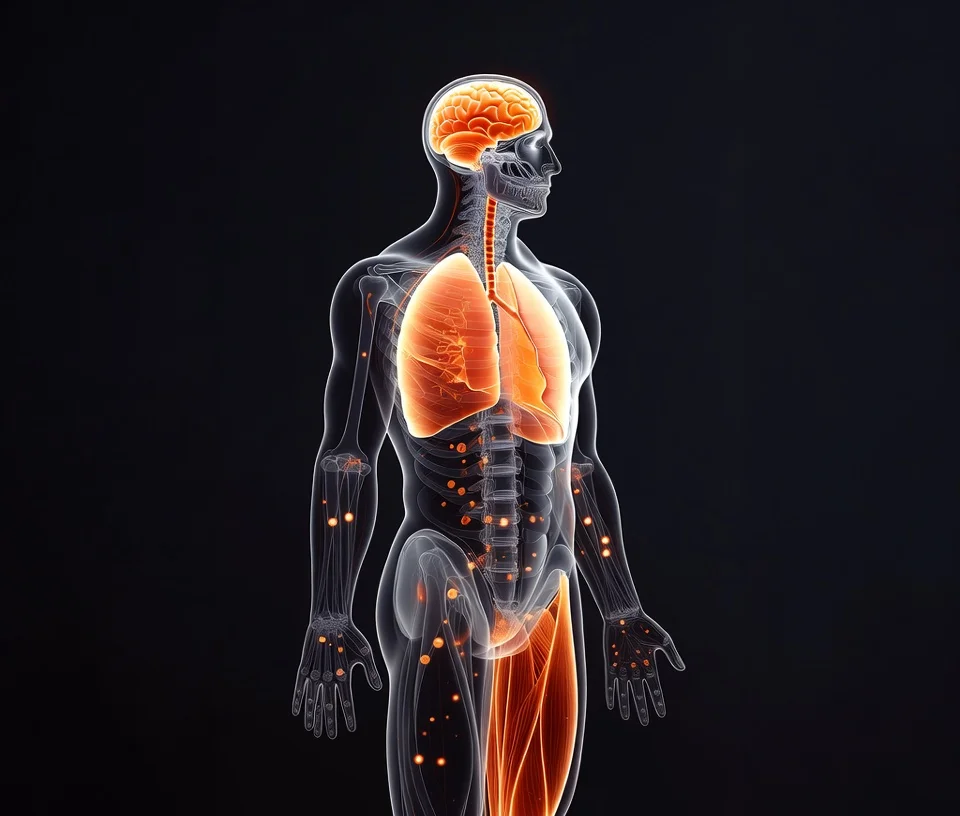
Where Cordyceps Works in Your Body
Tap or hover to explore each system
The ATP Pathway
How cordycepin is studied for its potential to support cellular energy production
Cordyceps Ingested
Cordycepin enters the bloodstream
Cells Absorb Cordycepin
Structurally similar to adenosine, cordycepin enters cells
Mitochondria Activated
Cordycepin supports mitochondrial efficiency
ATP Production Rises
More cellular energy available for body and brain
Sustained Energy
No crash, no jitters — cellular-level fuel
What the Research Shows
Clinical and systematic review findings on Cordyceps and performance
Performance Metrics
Journal of Dietary Supplements, systematic review — Cordyceps supplementation vs baseline
VO2 Max
% of baseline
Time to Exhaustion
% of baseline
Fatigue Resistance
% of baseline
Aggregated from systematic review of multiple clinical trials. Individual results may vary. Improvements observed with consistent supplementation over several weeks.
Cellular Energy Production
Chinese Journal of Integrative Medicine, 2014 — energy and fatigue measures
Data from clinical study in elderly subjects over 12 weeks. Individual results may vary.
From Tibetan Highlands to Modern Science
~1400s
Tibetan Highlands Discovery
Yak herders in the Tibetan Plateau notice their animals become unusually energetic after grazing on a small orange fungus growing from caterpillar larvae at high altitude.
~1600s
Chinese Imperial Medicine
Cordyceps sinensis enters Traditional Chinese Medicine pharmacopoeia. Known as "winter worm, summer grass" (dong chong xia cao), it becomes one of the most prized medicinal substances in the empire.
1993
Chinese Olympic Controversy
Chinese women distance runners break multiple world records. Their coach attributes the performance to a Cordyceps-based tonic, sparking global scientific interest in the fungus.
2004
Cordycepin Research
Researchers identify cordycepin (3'-deoxyadenosine) as a key bioactive compound in Cordyceps militaris and begin studying its role in ATP metabolism and cellular energy production.
2010
VO2 Max Studies
A systematic review in the Journal of Dietary Supplements finds Cordyceps supplementation associated with improved exercise performance and oxygen consumption across multiple trials. View study
2014
Elderly Fatigue Study
Chinese Journal of Integrative Medicine publishes study observing improved energy levels and fatigue resistance in elderly subjects supplementing with Cordyceps over 12 weeks. View study
The Key Compound: Cordycepin
A molecule unique to the Cordyceps genus
Cordyceps vs Common Energy Compounds
How it compares to other energy-supporting substances
| Compound | Mechanism | Onset | Crash | Level |
|---|---|---|---|---|
| Cordyceps | Cellular — ATP production + O2 utilization | 1–3 weeks | None | Cellular |
| Caffeine | CNS — blocks adenosine receptors | 15–45 min | Yes (4–6 hrs) | CNS only |
| Creatine | Cellular — phosphocreatine ATP buffer | 1–2 weeks | None | Cellular |
| B-Vitamins | Cofactor — supports metabolic pathways | Weeks (if deficient) | None | Cellular |
| CoQ10 | Mitochondrial — electron transport chain | 2–4 weeks | None | Cellular |
The Energy in the Stack
In Todd's Mushroom Brew, Cordyceps provides the cellular energy foundation for the four-mushroom system
Lion's Mane
Focus & Memory
Reishi
Calm & Stress Resilience
Cordyceps
Energy & Endurance
Chaga
Antioxidant & Immune
Cordyceps is included for its studied potential to support cellular energy production. Lion's Mane is studied for NGF and cognitive support. Reishi is valued for its traditionally used calming and adaptogenic properties. Chaga is researched for its antioxidant capacity. Together, these mushrooms are included to complement each other as part of a daily ritual.
Frequently Asked Questions
Power Your Day with Cordyceps
Todd's Mushroom Brew includes Cordyceps alongside Lion's Mane, Reishi, and Chaga in a 18-ingredient daily ritual.
TRY TODD'S BREW — $40/MO30 servings · Free shipping · Cancel anytime
*These statements have not been evaluated by the Food and Drug Administration. This product is not intended to diagnose, treat, cure, or prevent any disease. The information on this page is for educational purposes only and is not intended as medical advice. Consult your healthcare provider before starting any supplement regimen.
Explore more ingredients
Lion's Mane · Reishi · Chaga