Lion's Mane is a large, white, shaggy mushroom that grows on hardwood trees across North America, Europe, and Asia. Its cascading spines resemble a lion's mane — hence the name. In Japanese, it's called yamabushitake ("mountain priest mushroom").
Unlike most culinary mushrooms, Lion's Mane is prized for two compound groups — hericenones and erinacines — found in no other species on Earth. In laboratory and preclinical studies, these compounds have been shown to stimulate the production of nerve growth factor (NGF).
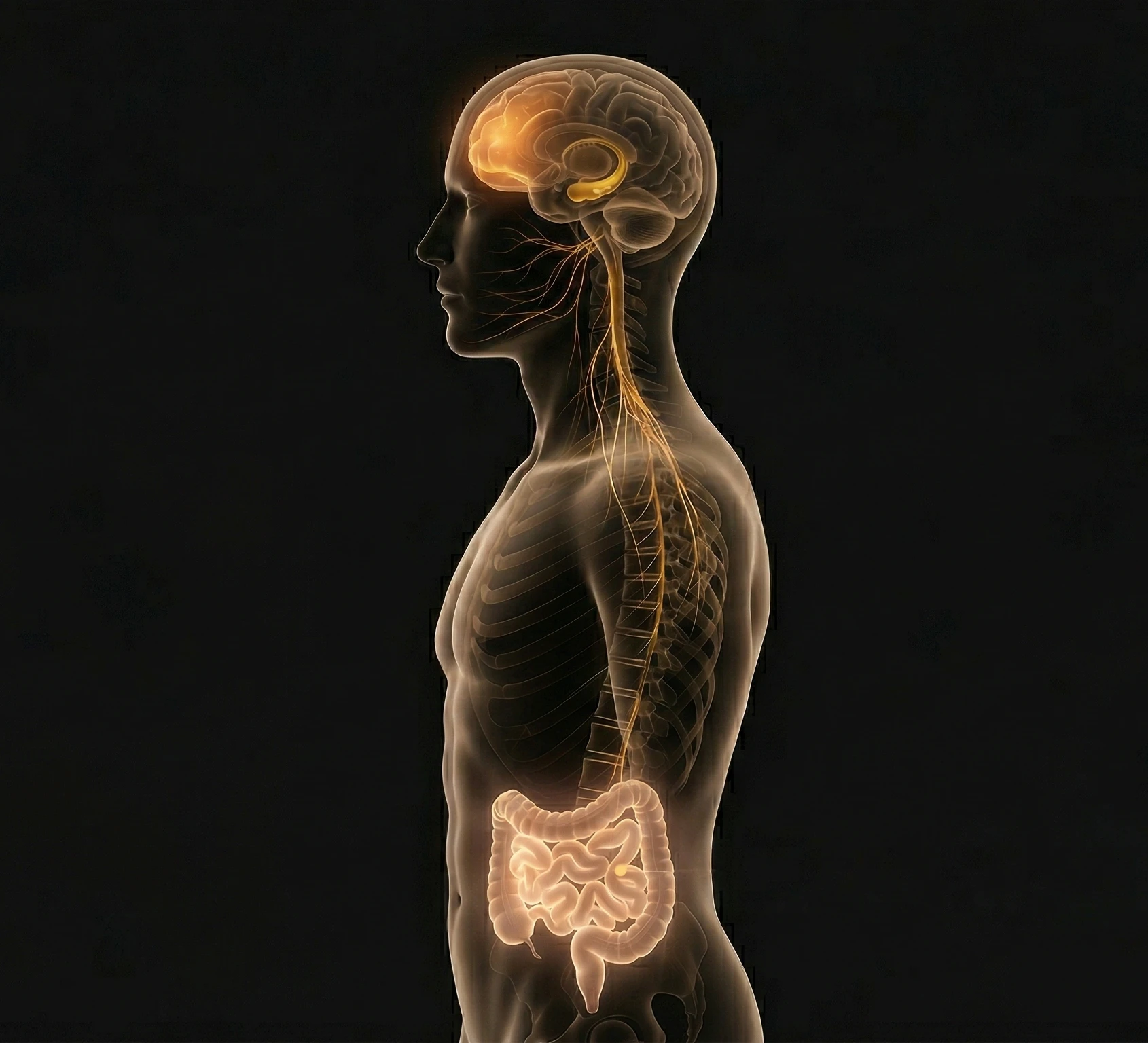
Where Lion's Mane Works in Your Body
Tap or hover on each region to learn how NGF affects it
How NGF Stimulation Works
From mushroom to neuron — the pathway that makes Lion's Mane unique
Lion's Mane
Hericenones (fruiting body) and erinacines (mycelium) are ingested
Crosses Blood-Brain Barrier
Erinacines are small enough to pass through the protective barrier surrounding the brain
Stimulates NGF Production
In preclinical studies, Nerve Growth Factor synthesis increased in the central nervous system
Neurogenesis
Research suggests new neurons may grow, existing neurons may strengthen, and nerve fibers may myelinate
Enhanced Cognition
Clinical trials have observed improvements in focus, memory consolidation, and cognitive function scores
Inside the Mushroom
Two compound families found in no other species — tap to learn more
What the Research Shows
Phytotherapy Research, 2009 — double-blind, placebo-controlled trial in adults aged 50–80
Cognitive Function Score Over 16 Weeks
Hasegawa Dementia Scale — Revised (HDS-R)
Data adapted from Mori et al., Phytotherapy Research (2009). Cognitive scores declined after supplementation stopped at week 16.
NGF Synthesis in Cell Cultures
Hericenones isolated from Lion's Mane fruiting body showed dose-dependent NGF-inducing activity in human astrocyte cell lines. Higher concentrations = proportionally more NGF production.
NDPIH — A New Discovery
A newly identified Lion's Mane compound (N-de phenylethyl isohericerin) was found in preclinical models to promote neuron growth through the ERK1 signaling pathway — a mechanism distinct from NGF.
2,000 Years of Lion's Mane
~200 AD
Ancient Chinese Medicine
First recorded use in Traditional Chinese Medicine for digestive and cognitive health.
~800 AD
Japanese Tradition
Known as yamabushitake — "mountain priest mushroom" — used by Buddhist monks for meditation and focus.
1991
Hericenones Discovered
Japanese researchers isolate hericenones from the fruiting body, identifying the first NGF-stimulating compounds.
1994
Erinacines Identified
Erinacines discovered in mycelium — potent enough to cross the blood-brain barrier and stimulate NGF directly in the brain.
2009
Landmark Clinical Trial
Double-blind, placebo-controlled trial published in Phytotherapy Research observed improved cognitive function scores in adults taking Lion's Mane vs placebo over 16 weeks. View study
2023
NDPIH Discovery
Journal of Neurochemistry identifies a new Lion's Mane compound (NDPIH) that, in preclinical models, promoted neuron growth through the ERK1 signaling pathway. View study
Lion's Mane vs Common Nootropics
How it compares to other cognitive enhancers
| Compound | Mechanism | Onset | Side Effects | Crash |
|---|---|---|---|---|
| Lion's Mane | NGF stimulation | 1–4 weeks | None reported | No |
| Caffeine | Adenosine receptor blocking | 15–45 min | Jitters, anxiety, insomnia | Yes |
| L-Theanine | Alpha wave promotion | 30–60 min | None typical | No |
| Modafinil | Dopamine reuptake inhibition | 1–2 hours | Headache, nausea, insomnia | Mild |
| Creatine | ATP regeneration | 1–2 weeks | None typical | No |
Better Together
In Todd's Mushroom Brew, Lion's Mane doesn't work alone — it's part of a four-mushroom system
Lion's Mane
Focus & Memory
Reishi
Calm & Stress Resilience
Cordyceps
Energy & Endurance
Chaga
Antioxidant & Immune
Lion's Mane is studied for NGF and neuroplasticity support. Reishi is traditionally used to promote calm and healthy stress response. Cordyceps is researched for cellular energy (ATP) production. Chaga is valued for its antioxidant properties. Together with the L-theanine in Todd's black tea base, these mushrooms are included to complement each other as part of a daily ritual.
Frequently Asked Questions
Experience Lion's Mane Daily
Todd's Mushroom Brew includes Lion's Mane alongside Reishi, Cordyceps, and Chaga in a 18-ingredient daily ritual.
TRY TODD'S BREW — $40/MO30 servings · Free shipping · Cancel anytime
*These statements have not been evaluated by the Food and Drug Administration. This product is not intended to diagnose, treat, cure, or prevent any disease. The information on this page is for educational purposes only and is not intended as medical advice. Consult your healthcare provider before starting any supplement regimen.